Why Section 7.2 of Awaab’s Law is the most important part nobody’s talking about
Blog Categories
This Articles Tagged Categories
Most landlords are thinking about Awaab's Law all wrong.
When the Hazards in Social Housing (Prescribed Requirements) (England) Regulations 2025 came into force on 27 October 2025, the conversation focused almost entirely on deadlines: 24 hours for emergencies, 10 working days for investigations, 5 working days for safety work. Important? Absolutely. But fixating on those timers causes social landlords to miss the part of the legislation that will define long-term compliance: Section 7.2, supplementary preventative works.
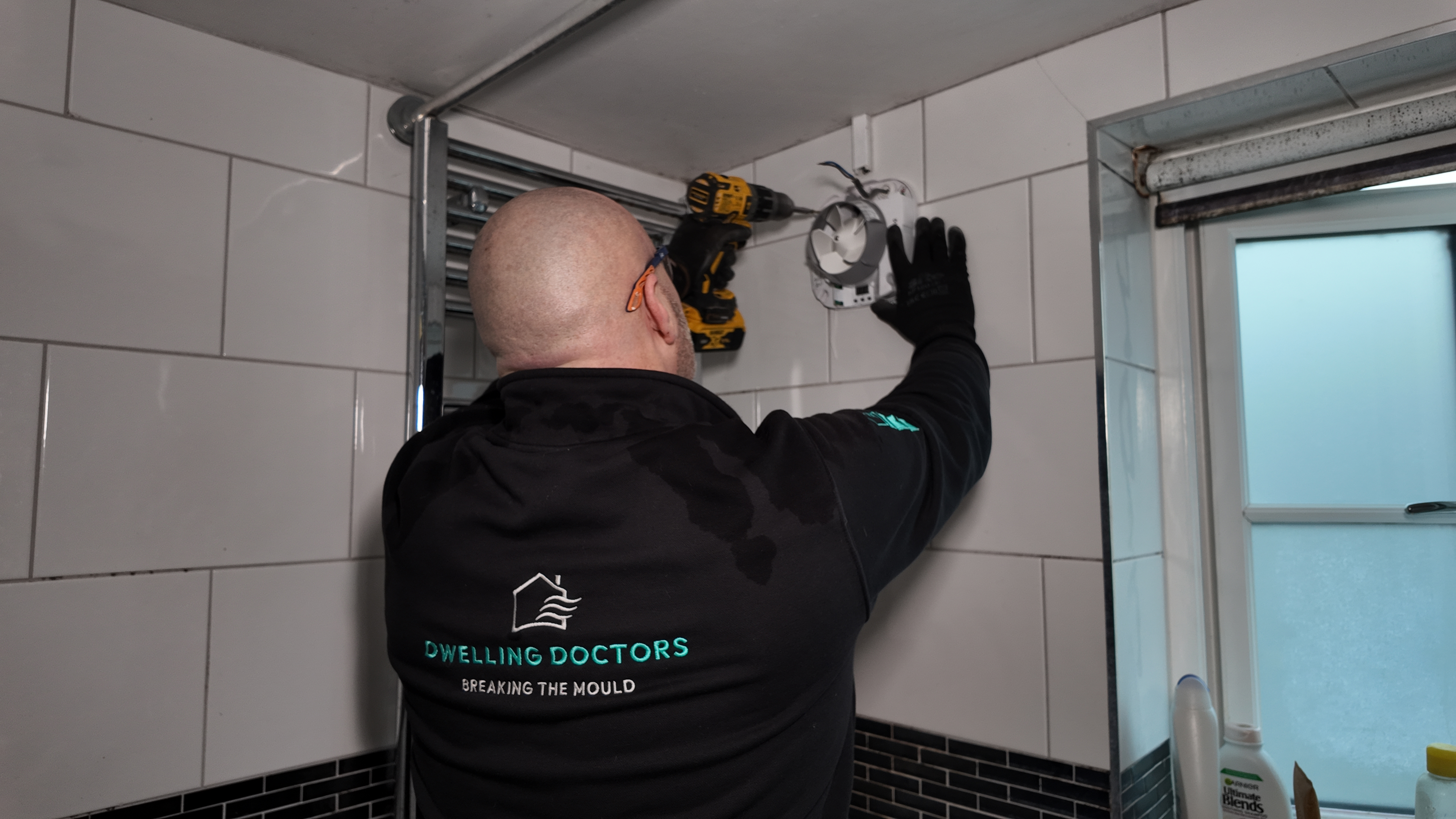
And in many damp and mould cases, the root cause ultimately comes back to ventilation.
The mistake: treating Awaab's Law as a cleaning problem
The death of two-year-old Awaab Ishak in 2020, from a severe respiratory condition caused by prolonged exposure to mould in his Rochdale home, was a systemic failure, not a cleaning failure. His family raised concerns with their social landlord repeatedly over three years. Nothing changed because nobody addressed why the mould kept coming back.
That distinction, between removing a hazard and preventing its return, is precisely what Awaab's Law is built around.
Section 7 of the official government guidance splits landlord obligations into two distinct duties:
- Section 7.1, relevant safety works: making the home safe from the immediate hazard, within 5 working days of an investigation concluding.
- Section 7.2, supplementary preventative works: stopping the hazard from coming back. Steps must begin within 5 working days of the investigation concluding, with physical works on site within 12 weeks.
These are not the same thing. Scrubbing mould off a wall satisfies 7.1. It does nothing for 7.2.
What Section 7.2 actually requires
True compliance with Section 7.2 demands a structured four-stage process:
- Hazard identification. The landlord becomes aware of a potential hazard, triggering the legal clock.
- Root cause assessment. This is where most landlords fall short. A proper Section 7.2 response requires the root cause to be properly assessed, not guessed. Is the mould caused by structural defects, inadequate insulation, thermal bridging, or poor ventilation performance? The government guidance notes that each home requires a tailored approach, and the coroner's findings in Awaab's case specifically criticised inconsistent diagnostic practices across the sector.
- Preventative works. Works must address the root cause directly: not just making the home safe today, but preventing the hazard recurring so far as possible. Depending on the diagnosis, this might mean installing mechanical ventilation with heat recovery, upgrading extract fans, or improving insulation at cold spots.
Verification. Landlords need to demonstrate that the remediation has genuinely changed the internal environment. A ventilation system installed but not performing as designed leaves the landlord fully exposed.
Why ventilation is so often the missing link
Millions of social housing units across the UK lack adequate mechanical ventilation. In tightly insulated or poorly ventilated homes, moisture from everyday living accumulates as condensation on cold surfaces, creating the conditions for mould growth. Yet when a mould complaint is raised, ventilation is rarely the first thing a landlord inspects, and even more rarely the first thing they fix.
The guidance is intentionally outcome-focused. It does not prescribe a single fix, it requires landlords to undertake preventative works appropriate to the cause of the hazard. Where inadequate ventilation is identified as the root cause, landlords will need to implement appropriate measures to address it and reduce the risk of recurrence. Cleaning the mould and repainting does not constitute preventative work. Improving airflow and verifying that the internal environment has genuinely changed does.
The stakes: what non-compliance looks like
Landlords who fail to begin supplementary preventative works within the required timeframes can face court action for breach of contract, Housing Ombudsman findings, unscheduled inspections from the Regulator of Social Housing, unlimited financial penalties, and in cases of persistent breach, criminal prosecution.
The scope is also expanding. In 2026, Awaab's Law extends to excess cold and heat, fire and electrical hazards, falls, and structural collapse. By 2027 it covers all remaining HHSRS hazards. Landlords who haven't embedded the Section 7.2 approach now will face an increasingly complex compliance landscape.
How Dwelling Doctors deliver 360° Section 7.2 compliance
Awaab's Law was not designed to be managed with a mop and a tin of anti-mould paint. It demands that housing hazards are treated with proper diagnostic rigour.
At Dwelling Doctors, we provide full 360-degree Awaab's Law compliance: from initial hazard surveys to root cause assessment, preventative and follow-on works, and verified ventilation performance.
Because stopping the mould coming back isn't a nice-to-have. Under Awaab's Law, it's the law.
Speak to Dwelling Doctors to find out how we can support your full Awaab's Law compliance programme.
Article Author

Lee Cummins
Lee is the Chief Operations Officer of Dwelling Doctors.